Structural Features of Flat Gate Valves
September 23, 2016
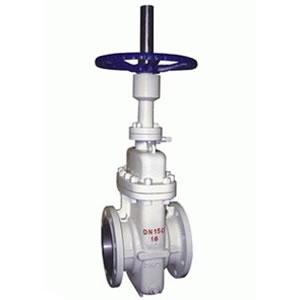
Flat gate valves have following structural features:
1. The sealing structure of seat is elastic and equipped with pre-tightening force. The sealing between seat and sealing face is always face-to-face sealing.
2. The seat has self-cleaning performance, and it cannot be washed out directly by media when the valve is on or off. The seat should be made from materials having lubrication and wearing resistance.
3. Obstacles on actuator of flat gate valves cannot impact other parts of valves. Maintenance and repairing can be carried out without tearing down the valves.
4. Body is classified into casting and welding, two type structures.
5. Seat adopts O-ring and floating seat which has been imposed with pre-tightening force, realizing double sealing at inlet and outlet of valves. Torque is only 1/2 of that on common valves, which can open or close valve easily.
6. Sealing face on seat is inlaid with PTFE, having PTFE-to-metal and metal-to-metal double sealing. PTFE sealing face can clean dirt on disc meanwhile.
7. Both disc and seat are dealt with by using special technology and sprayed or welded with cemented carbide, having wearing resistance and realizing double sealing. Disc and seat also can be injected with greases for double sealing, which extend services of flat gate valves.
8. When the valves are fully on, the passage is smooth, having extremely low flow resistance coefficient with few pressure losses.
9. The valves can take off high pressure inside lumen automatically to ensure security when closing.
10. Due to full sealing structure and good protection performance, the valves are suitable for all seasons.
Usage of flat gate valves
Flat gate valves is suitable for being used as transmission pipelines in various industries, including gas, oil, chemical engineering and environmental protection.
Scope of diameter: DN25~1200.
Pressure range: 0.6MPa~15MPa; 150LB~3000LB.
Related News
- The Functions and Working Principles of Ultra-high Temperature Ball Valves
- The Structure of Ultra-high Temperature Ball Valves
- Valves Used in the Coal Chemical Industry (Part Two)
- Valves Used in the Coal Chemical Industry (Part One)
- Common Faults and Main Causes of Valves
- Jamming & Tripping of Steam Turbine Pressure Relief Valves in a Power Plant
- Common Defects in Steel Valves
- How to Improve the Service Life of the High-pressure Valve?
- The Export Status and Regional Market Analysis of the Valve Manufacturing Industry in China
- Relevant Standards and Regulations for Electric Devices for Valves