Features of Pull Rod Welding Ball Valve
September 23, 2016
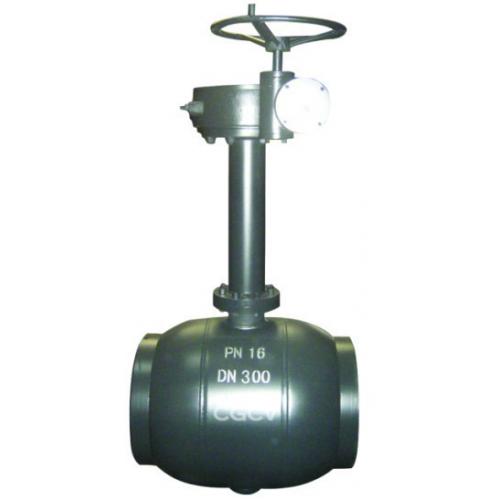
Pull rod welding ball valve has impressive performances in various industries. Because of excellent properties and high reliability, pull rod welding ball valve attracts more attentions than cast steel ball valve. Currently, pull rod welding ball valve has been widely applied in urban gas, urban heating, petrochemical industry, shipbuilding, steel and other industries. The followings are the features of pull rod welding ball valve.
1. The body is fully welded in case of external leakage;
2. Seat consists of PTFE sealing ring and spring which have strong adaptive capacity to pressure or temperature variation. Leakage cannot occur in any usable scope;
3. There are a PTFE self-sealing ring and an O-ring at the bottom of rod. And there are 2 O-rings and 2 PTFE sealing rings on the top, ensuring non leakage;
4. The material of body is the same as pipe without uneven stress. The body cannot be squeezed and deform for earthquake and vehicle passing through ground;
5. Body has light weight, easy for heat preservation;
6. Ball valve can be directly buried underground, without large valve chamber. Only a small shallow shaft is built up on the ground which saves cost and time;
7. The length of body and height of rod can be adjusted according to requirements of construction and design.
Besides, the valve can prevent personnel from being hurt when operates valve.
Next: Tips for Choosing Valves
Related News
- The Functions and Working Principles of Ultra-high Temperature Ball Valves
- The Structure of Ultra-high Temperature Ball Valves
- Valves Used in the Coal Chemical Industry (Part Two)
- Valves Used in the Coal Chemical Industry (Part One)
- Common Faults and Main Causes of Valves
- Jamming & Tripping of Steam Turbine Pressure Relief Valves in a Power Plant
- Common Defects in Steel Valves
- How to Improve the Service Life of the High-pressure Valve?
- The Export Status and Regional Market Analysis of the Valve Manufacturing Industry in China
- Relevant Standards and Regulations for Electric Devices for Valves